Korea makes its digital nomad visa permanent, with income tiers by age and region
South Korea · · Visa news for Chinese passport holders
South Korea turned its digital nomad (workation) visa, F-1-D, into a permanent visa category on 30 June 2026, after a pilot that ran for more than two years. The maximum stay rises from two years to three, and the flat income requirement of twice GNI per capita is replaced by a tiered scale of 1x, 1.5x or 2x depending on the applicant's age and where in Korea they will stay.
Income requirement, as a multiple of GNI per capita
Aged 18-34, outside the capital region2 → 1 × GNI-1
Aged 18-34, in the capital region2 → 1.5 × GNI-0.5
Aged 35+, outside the capital region2 → 1.5 × GNI-0.5
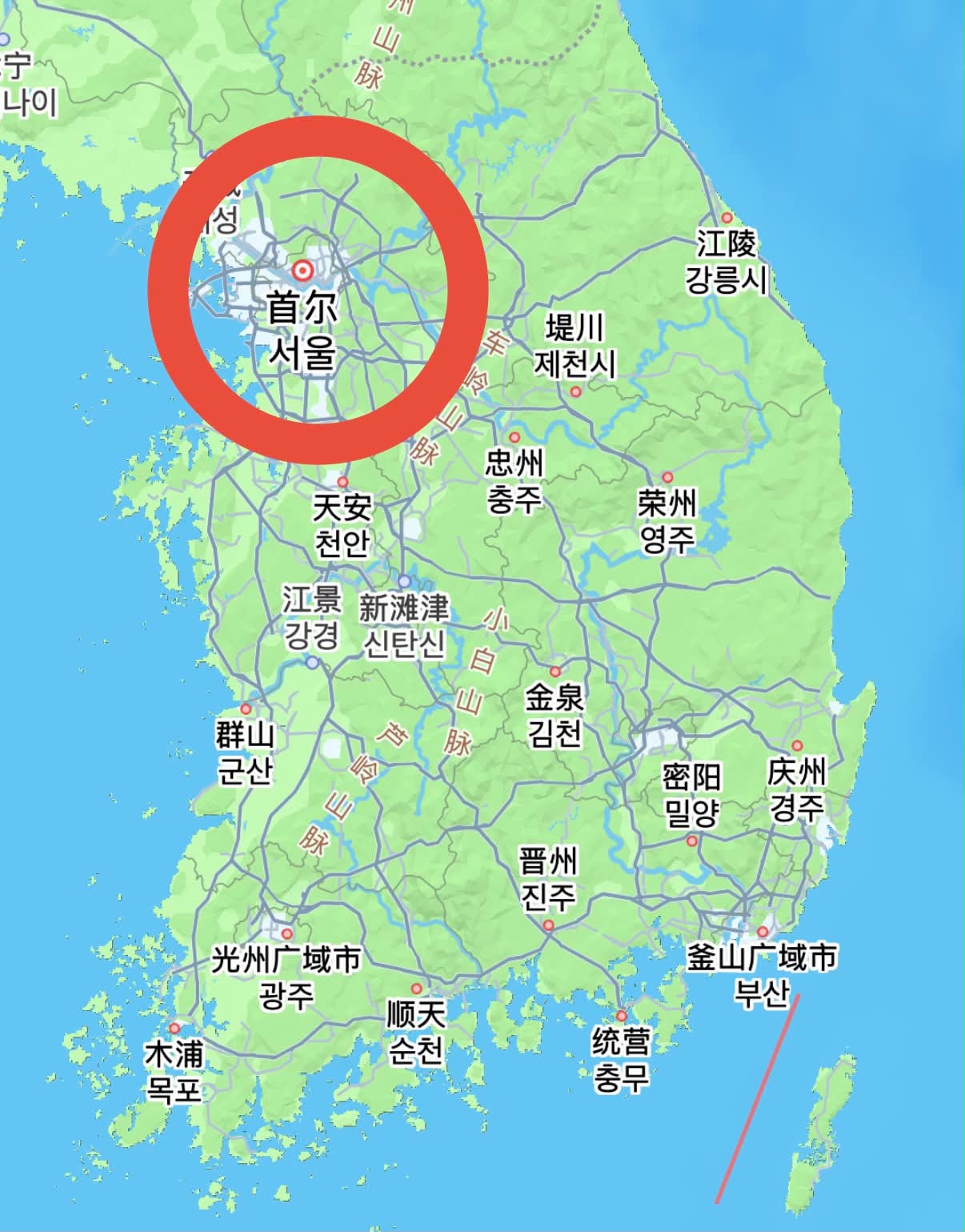
South Korea F-1-D income map
Where you stay changes the income floor
Annual income thresholds from 30 June 2026
Capital regionchufachufa.com
Previous ruleAged 18–34 · newAged 35+ · new
Outside capital region
KRW 104,832,000
KRW 52,416,000
KRW 78,624,000
Capital region
KRW 104,832,000
KRW 78,624,000
KRW 104,832,000No change
What changed
Korea's Ministry of Justice announced on 7 July 2026 that the digital nomad (workation) visa, F-1-D, left pilot status and became a permanent visa category on 30 June. The pilot had run since January 2024 and is aimed at people working remotely for an employer outside Korea, or running their own overseas business.
The substantive change is to income. During the pilot every applicant faced the same threshold: twice the previous year's gross national income per capita. The permanent scheme tiers it by age and by where the applicant will stay. Those aged 18 to 34 staying outside the Seoul metropolitan area — Seoul, Incheon and Gyeonggi — or in a population-declining or at-risk region need only 1x GNI per capita. The same age group staying inside the capital region needs 1.5x. Applicants aged 35 or over need 1.5x and 2x respectively. Age is assessed by calendar year rather than by birthday.
Against the published 2026 GNI per capita of KRW 52,416,000, that puts 1x at KRW 52,416,000 a year (about KRW 4,368,000 a month), 1.5x at KRW 78,624,000, and 2x at KRW 104,832,000.
One exception is easy to miss. If a spouse or minor children come too, the age bands stop applying: the threshold becomes 2x GNI in the capital region and 1.5x outside it. A 30-year-old planning to move to Busan with their family therefore faces 1.5x, not 1x.
The maximum stay rises from two years to three. Three years is a cumulative ceiling rather than a single grant — the visa is normally issued for one year at a time and extended annually.
Other conditions carry over from the pilot. Applicants must be 18 or over, have worked in the same industry for at least a year, and have their employer's permission to work remotely from Korea. Private medical insurance covering at least KRW 100m for treatment and repatriation is required, along with a criminal record certificate that has been apostilled or legalised. Employment and profit-making activity inside Korea remain prohibited. According to the Korean Embassy in Singapore's guidance, freelancers are not eligible: the visa is for people working remotely for overseas companies.
The reason for the tiers lies in how the pilot was taken up. The Seoul Shinmun reported that applications clustered heavily in the capital region, with five areas including Jeju receiving none at all. Lowering the bar outside Seoul is a direct attempt to change that.
One practical warning: some consular pages have not yet been updated and still show the pilot's flat threshold and two-year maximum. Work out which tier applies to your own circumstances and confirm it with the mission handling your application.
What this means
For remote workers aged 18 to 34 who are willing to live outside Seoul, Incheon and Gyeonggi, this is a real reduction: the income needed falls from roughly KRW 104.8m to roughly KRW 52.4m, a halving. For applicants aged 35 or over planning to live in Seoul, nothing has changed. For most people the decision becomes a straightforward trade: move outside the capital region and halve the income you must prove. Note that bringing family cancels the age discount, which is worth working out before you plan around the lower figure.
Related routes
Affected route: the F-1-D digital nomad (workation) visa. People already in Korea under K-ETA or a short-term visa such as B-1, B-2 or C-3 may apply to change to F-1-D at a local immigration office if they meet the requirements. Spouses and minor children can accompany the main applicant, though this changes which income tier applies. The visa is not a route to permanent residence and does not permit work inside Korea; people planning to stay longer usually need to move to another category such as the D-2 student visa or E-7 professional work visa.
 Capital regionchufachufa.com